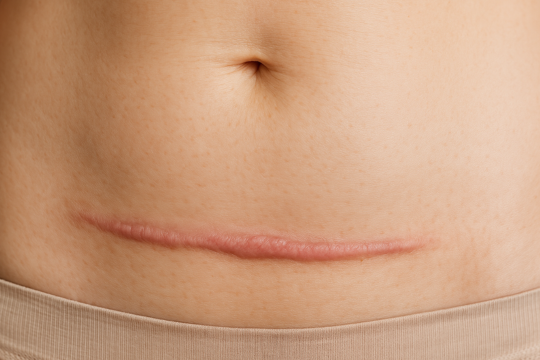
Abdominal surgery can leave more behind than a scar on the skin. A new practical workshop in Whakatāne is helping people understand what may be happening beneath the surface and what they can do to support their recovery.
When abdominal surgery is over and the incision has healed, it is easy to assume that recovery is complete.
But what if your scar still feels tight, numb or sensitive? What if your abdomen feels restricted, movement doesn’t feel quite the same or you continue to experience swelling or discomfort months, or even years, after surgery?
These are some of the questions that Scar and Trauma Specialist Sam Lyden wants people to explore at her upcoming Abdominal Scar Recovery Workshop in Whakatāne.
“Your scar is only one part of the healing process,” says Sam.
Sam specializes in supporting people following surgery, medical intervention, injury and long-standing trauma-related restriction. Her work focuses on restoring tissue glide, reducing restriction, supporting lymphatic function and improving functional movement, while respecting the physical and emotional impact that surgery and trauma can have on the body.
“When we have abdominal surgery, we tend to think about the incision and whether the scar itself has healed,” Sam explains. “But surgery affects much more than just the skin. It can affect the layers of tissue underneath, the fascia, movement, sensation and also the way fluid moves through the area.”
The workshop is designed to help participants understand these changes rather than simply accepting ongoing restriction as something they have to live with.
And this is not a workshop where participants simply sit and listen.
The four-hour session will be practical and hands-on, with Sam demonstrating gentle techniques to support tissue mobility, comfort and lymphatic flow. Participants will have the opportunity to practice techniques themselves, learning about pressure, direction and rhythm and importantly, understanding why they are doing them.
Gentle trauma-release techniques will also be included, recognizing that the body can hold responses to surgery and medical intervention long after the physical wound has closed.
“It’s about the scar, but it’s also about the tissues around it, movement, sensation, fluid flow and the body’s response to what it has been through,” says Sam.
Sam will be supported on the day by Nutritional Life Coach Paula Sharp, who will assist with the practical demonstrations and hands-on learning. The focus is very much on giving participants the confidence to understand their own bodies and safely explore techniques that may support their recovery. The workshop is suitable for people with no previous experience and is designed to be accessible whether surgery was relatively recent or happened many years ago.
The goal is not to promise a quick fix. It is about education, understanding and giving people practical tools to reconnect with their own bodies.
Sam hopes participants leave with “a better understanding of their own body, some practical techniques they can use safely and perhaps a different perspective on their scar and their recovery.”
Abdominal Scar Recovery Workshop – Understanding Your Body and Supporting Healing After Abdominal Surgery
Friday 4 September 2026 | 10am–2pm
EastBay R.E.A.P., 21 Pyne Street, Whakatāne
$220
To register your interest and find out more, visit samlydentherapy.com.
Your scar may tell the story of your surgery. It doesn’t necessarily tell the whole story of your recovery.